
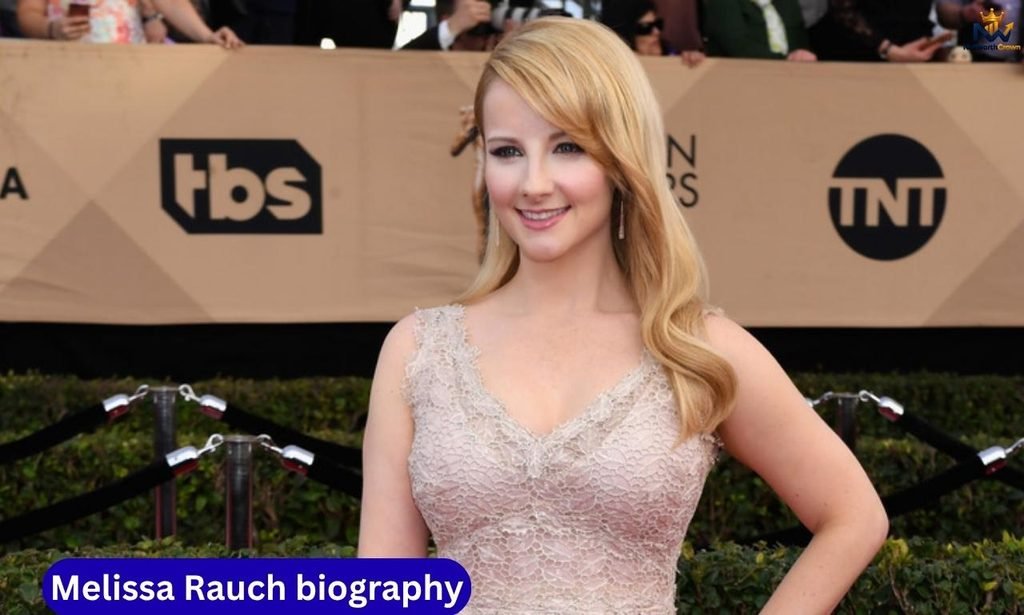
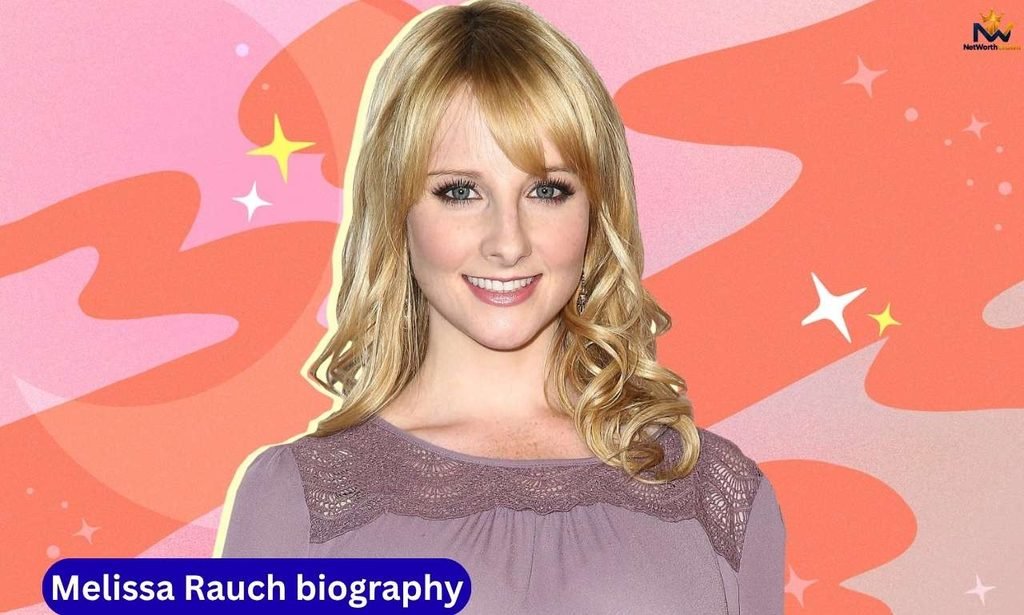
Melissa Rauch is an American actress, comedian, writer, and producer best known for playing Bernadette Rostenkowski-Wolowitz on the hit sitcom The Big Bang Theory. Her distinctive comic timing, memorable character work, and ability to move between television, film, voice acting, and production have helped her establish a lasting career in entertainment.
Born in New Jersey, Rauch developed an interest in performing at an early age. Before becoming widely recognized on television, she studied acting, performed stand-up comedy, and worked on projects that allowed her to develop her skills as a performer and writer. Her career changed significantly when she joined The Big Bang Theory in 2009. The role introduced her to a global audience and became the defining performance of her career.
Rauch later expanded her work beyond acting, including writing and producing the film The Bronze and starring in the television comedy Night Court. Her professional journey reflects the value of persistence, creative collaboration, and taking opportunities that may initially seem small.
This Melissa Rauch biography explores her early life, education, career development, major television and film roles, reported earnings, family life, awards, and professional achievements. It also separates publicly reported estimates from verified facts so readers can understand what is known about her career and what remains unconfirmed.
Quick Facts About Melissa Rauch
DetailInformation
Full name Melissa Ivy Rauch
Date of birth June 23, 1980
Age 46 as of October 11, 2026
Birthplace Marlboro Township, New Jersey, United States
Nationality American
Profession Actress, comedian, writer, and producer
Education Marymount Manhattan College; reported Bachelor of Fine Arts degree
Best-known role Bernadette Rostenkowski-Wolowitz in The Big Bang Theory
Other major television role Judge Abby Stone in Night Court
Film project The Bronze
Voice-acting credits Ice Age: Collision Course and Batman and Harley Quinn
Husband Winston Rauch, formerly credited as Winston Beigel
Children Two, according to public biographical listings
Career start Professional credits are commonly listed from 2006; comedy work began earlier
Estimated net worth Approximately $20 million in some third-party reports; unverified
Known for Comedy, television acting, writing, and producing
The quick facts provide an overview of Rauch’s life and work. Her age is calculated from her reported birth date, while the net-worth figure is an estimate published by entertainment websites rather than a confirmed statement of her personal finances.
Melissa Rauch Biography: Early Life and Education
Childhood and Family Background
Melissa Ivy Rauch was born on June 23, 1980, in Marlboro Township, New Jersey. Public biographical profiles identify her parents as Susan and David Rauch. She grew up in a family environment where her interest in entertainment developed during childhood.
Rauch became interested in acting at a young age. She has been associated with school performances and an early fascination with theatre, experiences that helped her explore the craft before pursuing it professionally. Like many performers, she had to develop her abilities through practice, performance, and experience rather than relying on a single opportunity to launch her career.
Her early interest in comedy eventually became an important part of her professional identity. Rauch’s later work shows a preference for characters with distinctive voices, strong personalities, and humorous reactions to everyday situations. These qualities became especially noticeable in her portrayal of Bernadette on The Big Bang Theory.
Details about her childhood should be presented with care. Public biographies provide some information about her family and education, but they do not establish every aspect of her private upbringing. The most useful focus is on the experiences that contributed to her interest in performance and the training she pursued as she prepared for a career in entertainment.
Education at Marymount Manhattan College
Rauch attended Marymount Manhattan College in New York City, where biographical profiles report that she earned a Bachelor of Fine Arts degree. Her college years were important because they gave her an opportunity to study performance while exploring the wider entertainment scene.
New York offered opportunities to observe live comedy, attend performances, meet other creative people, and gain practical experience. Rauch also performed stand-up comedy around Manhattan while studying. Those experiences helped her become more comfortable performing in front of audiences and developing material that depended on timing, delivery, and audience response.
Formal education was one part of her preparation, but it was not the only part. Performing in comedy venues and working on early projects gave her experience that a classroom alone could not provide. A performer must learn how to communicate a character, respond to direction, and adjust a performance to fit a particular production. These skills develop through a combination of training and practical work.
Her educational background is relevant to this Melissa Rauch biography because it shows that her eventual television success followed years of preparation. She did not become a familiar television personality overnight. Her progress involved education, comedy, auditions, smaller roles, and continued professional development.
Early Interest in Comedy
Rauch’s interest in comedy became particularly visible through her stand-up performances and a one-woman show titled The Miss Education of Jenna Bush. In the show, she portrayed Jenna Bush Hager, the daughter of former United States President George W. Bush.
The project demonstrated her interest in character-based comedy and satire. A one-person show requires more than delivering jokes: the performer must maintain the audience’s attention, establish a character, manage pacing, and sustain a performance without relying on a large ensemble. It also gives a writer-performer an opportunity to develop a personal creative voice.
Public biographical material associates the show with positive audience and critical attention in comedy and festival settings. Although it was not the project that made Rauch a mainstream television star, it was an important part of her development as a performer.
Her early work also illustrates why it is misleading to define an actor’s career only by the year a major television role begins. The public may first recognize a performer through a popular sitcom, but that visibility often follows a longer period of training, auditions, stage work, and smaller projects.
Melissa Rauch’s Career Journey
Early Acting Roles and Television Experience
Before her breakthrough on The Big Bang Theory, Rauch worked in comedy and appeared in smaller acting roles. Her early credits included work connected with Delirious, I Love You, Man, and other television and film projects. She also became familiar to some viewers through appearances connected with VH1’s Best Week Ever.
These early roles helped her gain experience in different forms of entertainment. Film comedy often requires performers to build a character within a limited amount of screen time, while television allows a role to develop across multiple episodes. Comedy panel and entertainment programs demand another set of skills, including quick responses, conversational timing, and the ability to contribute without dominating a group discussion.
Small roles may not attract the same attention as a successful sitcom, but they can help performers establish professional relationships and learn how productions operate. They also provide opportunities to understand how auditions, casting decisions, filming schedules, and collaboration work in practice.
Rauch continued building her career through these opportunities. Rather than being known immediately as a leading actress, she developed a record of comedy performances and screen appearances that eventually helped position her for a larger television role.
The Big Bang Theory Breakthrough
Rauch’s career changed significantly when she joined The Big Bang Theory in 2009. The CBS sitcom centered on a group of highly intelligent friends whose academic interests, social lives, and relationships created the basis for its comedy.
She played Bernadette Rostenkowski, a microbiologist who becomes an important part of the show’s wider social circle. Bernadette initially appears as a love interest for Howard Wolowitz, played by Simon Helberg. As the series develops, she becomes a central character in the ensemble and eventually marries Howard.
Rauch’s first appearance was as a guest character. She later became a regular cast member in the fourth season. This distinction matters: joining a television series as a guest performer is not the same as being part of the regular cast from the beginning. Her growing role reflected the character’s importance to the story and the show’s evolving ensemble.
Bernadette was memorable for her combination of a sweet-sounding voice, sharp wit, professional ambition, and strong personality. She could appear polite and gentle in one moment and unexpectedly forceful in the next. The contrast became a recurring source of comedy, but the character also developed beyond a collection of humorous traits.
As the show progressed, Bernadette’s professional life, marriage, friendships, and family responsibilities became part of the series. Rauch had to maintain the character’s recognizable comedic style while adapting to changes in the storyline. Her work alongside Helberg and the wider cast helped make Bernadette an enduring part of the sitcom.
The Big Bang Theory ran for 12 seasons, concluding in 2019. Rauch appeared in more than 200 episodes, according to IMDb’s professional listing. The show’s long run gave her extensive experience in television comedy and made her familiar to audiences around the world.
The series also transformed her public profile. Before joining the sitcom, she was a working performer with a mixture of stage, television, and film experience. After becoming a regular cast member, she was closely associated with one of the most recognizable comedy series of its era.
Why Bernadette Became a Memorable Character
Bernadette’s appeal came from the way the character combined seemingly contradictory qualities. Her voice and appearance could suggest a mild personality, but she was often decisive, competitive, and direct. This contrast allowed the writers to create comic surprises without making the character one-dimensional.
Rauch’s performance was important to that balance. A character with a distinctive voice can easily become repetitive if the actor relies on the voice alone. Rauch also used facial expressions, pauses, physical reactions, and changes in delivery to convey Bernadette’s attitude toward the other characters.
Her chemistry with Simon Helberg was another important element. Howard and Bernadette’s relationship evolved from early courtship to marriage and family life. The comedy came not only from their differences but also from the way they gradually adapted to each other.
Bernadette’s scientific career also helped broaden the show’s portrayal of women in professional settings. She was not simply defined by her relationship with Howard. Her work, ambitions, and workplace experiences became part of her identity, giving Rauch more opportunities to play different emotional and comedic situations.
The role demonstrated her ability to sustain a character over many seasons. Long-running television requires consistency, but it also requires flexibility as characters change. Rauch’s performance helped Bernadette remain recognizable while participating in new storylines.
Film Career and The Bronze
Although television brought Rauch her greatest mainstream recognition, she also pursued film work. One of her most significant projects was The Bronze, a sports comedy-drama released in 2015.
In the film, Rauch played Hope Ann Greggory, a former gymnastics star whose identity and sense of importance are closely tied to her past athletic achievement. The story explores what happens when a once-celebrated athlete struggles to adjust to life after the peak of her career.
Rauch was not only the star of The Bronze. She also co-wrote and executive-produced the project with her husband, Winston Rauch. This made the film an important example of her work behind the camera as well as in front of it.
Writing a film allows a performer to influence the story, dialogue, character motivations, and tone before filming begins. Producing can involve a different set of responsibilities, including helping move a project through development and production. These roles require collaboration and decision-making that go beyond acting in a completed script.
The Bronze also gave Rauch an opportunity to play a character quite different from Bernadette. Hope is abrasive, deeply flawed, and often deliberately unlikable. The performance required Rauch to work with uncomfortable humour and a character whose behaviour could be both entertaining and difficult to defend.
The film did not have the same broad cultural reach as The Big Bang Theory, but it remains an important credit in her career because it highlights her creative involvement in a feature-length production.
Voice Acting and Animated Projects
Voice acting has provided Rauch with another way to use her performance skills. Unlike live-action work, voice acting depends heavily on vocal expression, timing, rhythm, and the ability to communicate a character without relying on facial expressions or physical movement visible to the audience.
Rauch voiced Francine in Ice Age: Collision Course, the 2016 animated film in the Ice Age franchise. She also voiced Harley Quinn in the 2017 animated film Batman and Harley Quinn.
These projects required her to adapt her voice to characters and stories different from her live-action sitcom roles. Animation also involves a different production process. Actors may record dialogue separately from other performers, and the finished performance is combined with animation, editing, sound effects, and music.
Voice acting can broaden a performer’s range and expose their work to audiences who may not regularly watch their live-action projects. It also shows that an actor’s career can include several kinds of performance rather than one signature role.
Rauch’s animated credits are a useful part of her professional profile because they demonstrate her ability to work in family-oriented animation and comic-book entertainment. They also illustrate how voice performance can complement a career in television and film.
Night Court and Her Work as a Producer
After The Big Bang Theory ended in 2019, Rauch took on another prominent television role in the revival of Night Court. The series premiered in 2023 and brought a new generation of viewers to the courtroom comedy format associated with the original show.
Rauch played Judge Abby Stone, who presides over a Manhattan night court. Abby is the daughter of Judge Harry Stone, the central character played by Harry Anderson in the original series. Rauch’s character therefore connected the revival to the earlier programme while establishing her own place within the story.
The role differed from Bernadette in both setting and responsibility. Instead of playing a scientist in a group sitcom, Rauch portrayed a judge managing a courtroom filled with unusual cases, eccentric colleagues, and comedic conflicts. The character needed to balance authority with warmth and humour.
Rauch also served as an executive producer on the revival. Her involvement behind the scenes showed that her professional interests extended beyond acting. Executive producers can have different responsibilities depending on the project, so the title should not be taken to mean that every producer performs the same duties. In Rauch’s case, her credited role is an important part of her career record.
Night Court ran for three seasons, from 2023 to 2025. NBC cancelled the revival in May 2025. It should therefore be described as a completed, cancelled series rather than a programme that is still airing. Its cancellation does not erase the work Rauch contributed to the show, but it is relevant context when describing her recent television career.
The revival added another major lead role to her filmography and gave her further experience in television production. It also showed that she could take on a different kind of comedy series after spending a decade associated with one especially successful sitcom.

Melissa Rauch Net Worth in 2026
Melissa Rauch’s net worth is often estimated at approximately $20 million by third-party entertainment websites. Celebrity Net Worth and Parade have both published this figure. However, neither estimate should be treated as a verified statement of Rauch’s actual assets, liabilities, investments, or current financial position.
A celebrity net-worth estimate is generally an attempt to approximate the value of a person’s financial holdings after considering publicly reported income and other available information. The underlying details are rarely complete. An actor’s contracts, taxes, expenses, investments, property ownership, debts, and business arrangements may not be publicly disclosed in full.
For that reason, the most accurate wording is that Rauch has an estimated net worth of about $20 million according to some entertainment publications. It would be misleading to describe that amount as an officially confirmed balance or as money she necessarily holds in cash.
Her long-running role on The Big Bang Theory is an important part of the context behind these estimates. The show ran for 12 seasons and provided Rauch with years of television work. Her later film, voice-acting, writing, and producing credits add to the picture of a career that includes more than one source of professional income.
Still, a successful acting career does not reveal a person’s complete financial circumstances. A reliable biography should explain the public estimates while acknowledging that precise personal wealth is not independently established by the available reporting.
Reported Salary from The Big Bang Theory
Entertainment reporting has described changes in Rauch’s reported per-episode salary during The Big Bang Theory. Parade’s January 2026 report says she began at approximately $45,000 per episode during Season 3, later moved to reported rates of $175,000 and $200,000, and reached a reported $500,000 per episode near the end of the show’s run.
These figures should be attributed to the reporting rather than presented as details from a contract publicly verified by Rauch. Salary reports may be based on industry sources and contract coverage, but the complete terms of an individual actor’s agreement are not necessarily public.
The $500,000 figure is especially likely to attract attention because of the show’s large audience and long run. Parade calculates that 48 episodes across the final two seasons, multiplied by $500,000 per episode, would equal $24 million. The arithmetic is correct:
$500,000 × 48 episodes = $24 million.
However, this calculation is not proof that Rauch personally received $24 million in final-season salary. It depends on the reported rate applying to all 48 episodes, and it represents a hypothetical gross amount before taxes, representation fees, expenses, and any other contractual details. The available article does not provide Rauch’s complete pay records or a verified statement of the total she received.
Explore more celebrity biographies to discover the personal lives, careers, achievements, and estimated net worths of your favorite stars.
It is therefore better to describe the $24 million figure as a calculation based on reported salary terms, not as confirmed personal earnings. It also should not be confused with net worth, which is a broader estimate of assets minus liabilities and is not equivalent to career income.
Did Night Court Increase Her Earnings?
Rauch starred in and executive-produced Night Court, but the exact salary she received for the revival has not been publicly established in the reporting cited here. Parade notes that her Night Court compensation is not known.
Her position as both a leading performer and an executive producer indicates that she had more than one credited role on the project. It does not, by itself, establish the size of her compensation or the financial terms of her contract.
The same caution applies to other television and film projects. Actors may receive a fixed fee, episodic compensation, residual payments, producer compensation, or other contractual benefits, but those arrangements vary. Without reliable reporting about a specific agreement, it is not appropriate to assign an exact amount.
How Reliable Is the $20 Million Estimate?
The $20 million figure is best understood as a widely repeated public estimate, not a verified financial disclosure. Celebrity Net Worth listed the figure in a profile updated in September 2026, while Parade also reported it in January 2026.
The agreement between two websites does not independently prove the amount. Entertainment outlets may rely on similar public reporting, and net-worth estimates often lack a transparent calculation that readers can reproduce.
No complete public inventory of Rauch’s assets, liabilities, investment accounts, property holdings, or private business interests is established by these estimates. Therefore, this article does not assign her a specific home value, investment portfolio, annual income, or cash balance.
For readers, the useful takeaway is that Rauch’s career has included a long-running sitcom, leading roles, film work, voice acting, and producing credits. These activities help explain why financial publications place her among successful television performers, but they do not establish a precise personal fortune.
How Melissa Rauch Built Her Career
Television Acting
Television has been the most visible part of Rauch’s career. Her work on The Big Bang Theory gave her an extended role in a successful ensemble, while Night Court placed her at the centre of a different sitcom.
Long-running television work can provide professional stability and recognition, although exact earnings depend on contracts and production arrangements. It also gives actors opportunities to develop characters over time, build relationships with fellow performers, and gain experience across many episodes.
Rauch’s career illustrates the difference between a memorable supporting role and a leading role. Bernadette began as a guest character and became a regular presence. Abby Stone, by contrast, was the central character in the Night Court revival from its beginning.
Film, Animation, and Other Performance Work
Rauch’s film and voice-acting credits show that her work is not limited to television sitcoms. The Bronze gave her an opportunity to combine acting, writing, and producing, while Ice Age: Collision Course and Batman and Harley Quinn brought her voice to animated productions.
Different formats require different techniques. A live-action comedy may depend on facial reactions and interaction with other actors, while animation relies on vocal choices and the timing of recorded dialogue. Film writing and production introduce further responsibilities that may take place before or after the on-screen performance.
Her varied credits help explain the breadth of her career more accurately than a biography focused on one role alone.
Writing and Producing
Rauch’s work as a co-writer and executive producer on The Bronze, along with her executive-producing credit on Night Court, demonstrates her involvement in the development and production side of entertainment.
Writing and producing are not simply extensions of acting. Writing requires decisions about story, dialogue, character, and structure. Producing can involve helping organise a project, supporting its development, and working with other creative and business teams.
The exact responsibilities associated with a producer credit vary from production to production. A biography should therefore describe Rauch’s credited roles without assuming that she controlled every creative or financial decision on a project.
Her writing and producing work is a significant part of her professional profile because it shows that she has pursued creative responsibilities beyond performing a role written by someone else.
Awards and Professional Recognition
Melissa Rauch’s career has received recognition through award nominations and ensemble honours. Awards databases list nominations connected with The Big Bang Theory, including recognition from the Critics’ Choice Television Awards and ensemble nominations from the Screen Actors Guild Awards, now known as the Actor Awards.
Awards records can change as databases are updated, and some honours are given to an entire cast rather than an individual performer. The table below distinguishes nominations from wins and avoids presenting a nomination as an award victory.
Year Award or organisation Category or recognition Project Result
2013 Critics’ Choice Television Awards Best Supporting Actress in a Comedy Series The Big Bang Theory Nominated
2013 Screen Actors Guild Awards Outstanding Performance by an Ensemble in a Comedy Series The Big Bang Theory Nominated
2014 Screen Actors Guild Awards Outstanding Performance by an Ensemble in a Comedy Series The Big Bang Theory Nominated
2014 People’s Choice Awards Favorite TV Gal Pals, shared with Kaley Cuoco and Mayim Bialik The Big Bang Theory Nominated
2015 Screen Actors Guild Awards Outstanding Performance by an Ensemble in a Comedy Series The Big Bang Theory Nominated
2016 Screen Actors Guild Awards Outstanding Performance by an Ensemble in a Comedy Series The Big Bang Theory Nominated
2016 Online Film & Television Association Best Supporting Actress in a Comedy Series The Big Bang Theory Nominated
2017 Screen Actors Guild Awards Outstanding Performance by an Ensemble in a Comedy Series The Big Bang Theory Nominated
2018 Behind the Voice Actors Awards Voice-acting ensemble recognition Batman and Harley Quinn Nominated
2020 CinEuphoria Awards Merit – Honorary Award, shared with the ensemble and creative team The Big Bang Theory Won
This table is a selected overview rather than a claim that it includes every award or nomination associated with Rauch. The CinEuphoria recognition was shared with a broader group connected with the show, so it should not be described as a solo acting award.
The distinction between nominations and wins is important. A nomination indicates that a performance or production was considered for recognition; it does not mean that the nominee won. Similarly, an ensemble honour recognises a group and should not be presented as an individual award without explanation.
Rauch’s professional recognition is also not limited to awards. Her recurring role on a major sitcom, her transition to a lead role in Night Court, and her involvement in writing and producing demonstrate sustained participation in television and film.
Husband and Family Life
Who Is Melissa Rauch’s Husband?
Melissa Rauch is married to writer and producer Winston Rauch, who was previously known professionally as Winston Beigel. Public biographical listings identify the couple as having married in 2007.
Winston Rauch has worked with Melissa on creative projects, including The Bronze. Their relationship therefore includes both family life and professional collaboration. Working together can allow creative partners to develop projects from an early stage, although the details of their private working arrangements are not fully public.
The couple’s collaboration is a relevant part of Melissa’s career story because The Bronze involved her not only as an actor but also as a co-writer and executive producer. It is a concrete example of their shared professional work.
Beyond those publicly documented credits, it is best not to speculate about their finances, private decisions, or personal arrangements. A biography can acknowledge their marriage and creative collaboration while respecting the distinction between public information and private family life.
Does Melissa Rauch Have Children?
Public biographical listings report that Melissa and Winston Rauch have two children: a daughter, Sadie, and a son, Brooks. The couple generally keep their children’s lives out of the public spotlight.
Because the family has chosen to maintain privacy around many personal details, a responsible biography should not add unsupported claims about the children’s daily lives, schools, or private routines. The relevant biographical fact is simply that public profiles identify Rauch as a mother of two.
Balancing a demanding entertainment career with family responsibilities can require careful planning, but it would be speculative to describe the couple’s specific household arrangements without reliable information. The focus should remain on what is publicly documented rather than assumptions about how their family operates.
Keeping Personal Life Separate from Public Fame
Rauch’s public image is closely associated with her television roles, but her private life is not the same thing as her on-screen identity. Bernadette and Abby Stone are fictional characters written for entertainment. Their attitudes, dialogue, and storylines should not automatically be treated as evidence of Rauch’s personal beliefs or behaviour.
This distinction is especially important for comedy performers, who may play exaggerated personalities for humorous effect. An actor’s performance is a professional creation shaped by scripts, direction, and collaboration.
For that reason, this Melissa Rauch biography focuses on her public career, credited projects, reported family details, and professional achievements without making unsupported claims about her private life.
Melissa Rauch Career Timeline
The following timeline highlights documented career milestones rather than attempting to assign a net-worth figure to each year. Reliable, comparable annual estimates of Rauch’s personal wealth are not established in the sources cited here.
Year or period Career milestone
Early career Studied acting, performed stand-up comedy, and developed stage and comedy work in New York City.
2006 onward Professional screen credits are commonly listed from 2006, although her performance experience began earlier.
2009 Joined The Big Bang Theory as Bernadette Rostenkowski.
Fourth season of The Big Bang Theory Became a regular cast member after first appearing as a guest character.
2015 Starred in, co-wrote, and executive-produced The Bronze.
2016 Voiced Francine in Ice Age: Collision Course.
2017 Voiced Harley Quinn in Batman and Harley Quinn.
2019 The Big Bang Theory concluded after 12 seasons.
2023 Began starring as Judge Abby Stone in the Night Court revival.
2025 Night Court ended after NBC cancelled it following three seasons.
2026 Third-party entertainment websites continued to publish a net-worth estimate of approximately $20 million; the amount remains unverified.
This timeline shows how Rauch moved from comedy and early acting work to a long-running television role, followed by film, animation, writing, producing, and another leading sitcom role. It does not claim that her wealth increased by a specific amount in any particular year.
10 Interesting Facts About Melissa Rauch
1. Her Full Name Is Melissa Ivy Rauch
Professional profiles identify her full name as Melissa Ivy Rauch. She is widely known professionally as Melissa Rauch, the name associated with her television, film, and production credits.
2. She Studied at Marymount Manhattan College
Rauch attended Marymount Manhattan College in New York City. Biographical profiles report that she earned a Bachelor of Fine Arts degree, providing a formal foundation for her interest in performance.
3. She Performed Stand-Up Comedy
Before becoming a familiar television actress, Rauch performed stand-up comedy in Manhattan. Live comedy gave her opportunities to develop timing, delivery, and confidence in front of an audience.
4. Her Early Work Included a One-Woman Show
Her show The Miss Education of Jenna Bush demonstrated her interest in writing and character-based comedy. It was an early example of her ability to build a performance around a specific comedic persona.
5. Bernadette Began as a Guest Character
Rauch did not join The Big Bang Theory as a regular cast member from the beginning. Bernadette first appeared as a guest character before becoming a regular during the show’s fourth season.
6. Her Big Bang Character Was a Scientist
Bernadette worked as a microbiologist in the series. Her professional identity was an important part of the character, alongside her marriage to Howard and her relationships with the other members of the group.
7. She Helped Create The Bronze
Rauch starred in, co-wrote, and executive-produced the 2015 film The Bronze. The project showed her involvement in the creative process beyond performing on screen.
8. She Has Voiced Animated Characters
Her voice credits include Francine in Ice Age: Collision Course and Harley Quinn in Batman and Harley Quinn. These roles allowed her to work in animation as well as live-action comedy.
9. She Played a Judge in Night Court
Rauch starred as Judge Abby Stone in the Night Court revival. She also received an executive-producer credit on the series, expanding her work behind the scenes.
10. Her Reported Net Worth Is Not Officially Confirmed
Some entertainment websites estimate Rauch’s net worth at approximately $20 million. That figure is a third-party estimate, not an official financial disclosure, and should be described accordingly.
Frequently Asked Questions About Melissa Rauch
1. Who Is Melissa Rauch?
Melissa Rauch is an American actress, comedian, writer, and producer. She is best known for playing Bernadette Rostenkowski-Wolowitz on The Big Bang Theory and Judge Abby Stone on Night Court.
2. How Old Is Melissa Rauch in 2026?
Melissa Rauch was born on June 23, 1980. She is 46 years old as of October 11, 2026.
3. What Is Melissa Rauch’s Net Worth?
Some third-party entertainment publications estimate her net worth at approximately $20 million. This is not a verified financial statement, and her exact assets and liabilities are not publicly established by those estimates.
4. How Did Melissa Rauch Become Famous?
Rauch became widely known through her role as Bernadette Rostenkowski-Wolowitz on The Big Bang Theory. She joined the series in 2009, initially as a guest character, and later became a regular cast member.
5. How Much Did Melissa Rauch Reportedly Earn on The Big Bang Theory?
Parade has reported that her per-episode salary increased during the series and reached a reported $500,000 near the end of its run. The figure is based on entertainment reporting, not a complete publicly verified record of her compensation.
6. Did Melissa Rauch Earn $24 Million from The Big Bang Theory?
A published calculation multiplies a reported $500,000 per episode by 48 episodes, producing $24 million. This is a hypothetical gross calculation based on reported terms, not proof that she personally received that exact amount.
7. Who Is Melissa Rauch’s Husband?
Melissa Rauch is married to writer and producer Winston Rauch, formerly credited as Winston Beigel. Public biographies list their marriage as beginning in 2007, and they have collaborated on creative projects.
8. Does Melissa Rauch Have Children?
Public biographical listings report that she and her husband have two children. The couple keeps many details about their children’s lives private.
9. What Did Melissa Rauch Study in College?
Rauch attended Marymount Manhattan College in New York City. Public biographical profiles report that she earned a Bachelor of Fine Arts degree.
10. What Happened to Night Court?
The Night Court revival premiered in 2023 and ran for three seasons. NBC cancelled it in May 2025, so it should not be described as a currently running series.
11. Did Melissa Rauch Work on The Bronze?
Yes. Rauch starred in the 2015 film The Bronze and also co-wrote and executive-produced it. The project is an important example of her creative work beyond acting.
12. Which Animated Projects Has Melissa Rauch Worked On?
Her voice-acting credits include Ice Age: Collision Course and Batman and Harley Quinn. In the latter, she voiced Harley Quinn.
13. Has Melissa Rauch Won Any Awards?
Awards listings include nominations for her work on The Big Bang Theory, including a Critics’ Choice Television Award nomination and ensemble nominations. A selected CinEuphoria Award listing records a shared honorary recognition for the show’s wider creative team in 2020. Individual nominations, ensemble honours, and wins should be described separately.
14. When Did Melissa Rauch Start Her Career?
Professional screen credits are commonly listed from 2006, while her comedy and performance experience began earlier. The year 2006 is best treated as a filmography reference point rather than the exact beginning of every aspect of her career.
15. Is Melissa Rauch Also a Writer and Producer?
Yes. In addition to acting, Rauch co-wrote and executive-produced The Bronze and served as an executive producer on Night Court. These credits show her involvement in the development and production of entertainment projects.
Conclusion
Melissa Rauch’s career reflects years of performance, comedy, and creative development. Her work began with education, stand-up comedy, and early acting roles before her portrayal of Bernadette Rostenkowski-Wolowitz on The Big Bang Theory introduced her to a much larger audience. That role became a defining part of her professional identity and gave her the opportunity to demonstrate her skills across more than 200 episodes.
Her career did not end with the sitcom. Rauch pursued film work, voiced animated characters, co-wrote and executive-produced The Bronze, and later starred as Judge Abby Stone in the Night Court revival. These projects reveal a professional profile that extends beyond a single television character.
Financial figures require more caution. Some entertainment publications estimate her net worth at approximately $20 million and have reported a high per-episode salary for the final seasons of The Big Bang Theory. Those figures are useful as examples of what has been reported publicly, but they do not establish her exact wealth or total personal earnings. The $24 million salary calculation, in particular, should not be presented as a verified payment.
Overall, this Melissa Rauch biography shows how a performer can build a lasting career through acting, comedy, writing, and producing. Her most recognisable roles remain important milestones, while her broader creative work demonstrates that her professional experience includes much more than one successful sitcom.